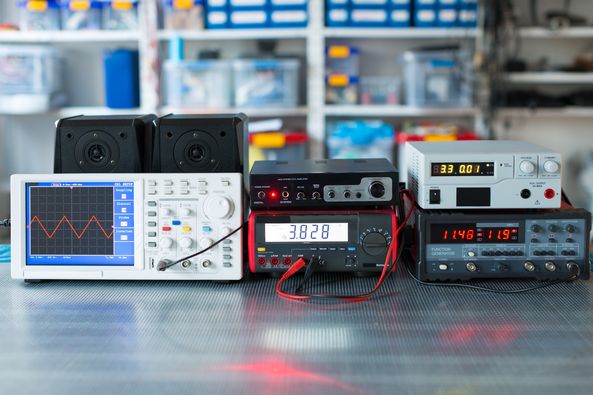
Flow Meter Installation Tips To Maximize Efficiency

Flow water meter measure the volume of water that flows through a pipe, while water meters measure how much water has been used in a specific time period. But what if you have questions about your installation? 

Here are some tips on how to maximize the efficiency of your flow meter installation!

Clean the installation location

Cleaning the installation location of Flow water meter is important to ensure that you have a clean, professional appearance. Use a power washer or other appropriate tool to clean the area thoroughly. If you need to remove any dirt from deeper within the pipe, use a vacuum or degreaser instead of water pressure.

Use high-quality tape to mask the area

When installing a water flow meter, it is important to use high-quality tape to mask the area. 

This will help to maximize the efficiency of the installation and ensure that the meter is properly sealed. There are a variety of tapes available on the market, so it is important to select one that is specifically designed for water applications. 

The tape should be able to withstand high temperatures and pressures, as well as be resistant to UV light and chemicals. Once the tape has been applied, it is important to check for leaks and make sure that the connection is secure.

Flow meter water
Flow water meter

Don’t over-tighten bolts; torque to specifications

  • Don’t over-tighten the bolts. Over-tightening can cause damage to the pipe, fittings and/or meter itself.
  • Use a torque wrench or breaker bar to tighten each bolt to specifications. A good rule of thumb is to use one-third more than what you would typically use for an average fastener; this will give you room for error if something goes wrong during installation (like hitting a rock).
  • Use caution when using power tools such as drills or hammers—these tools can easily damage internal components if used incorrectly!

Use the right size bolt and thread it into a blind hole

When drilling a hole, use the right size bolt and thread it into a blind hole.

  • If your meter is a “blind” type, you will need to drill with a 1/2″ or 3/4″ bit for best results.
  • Make sure that your thread depth is at least 0.25 inches so that there are no gaps or burrs on the inner surfaces of your pipes when they are installed in place later on during installation work.
  • You can use different types of threads based on what kind of pipe you have but keep in mind that each one has its own pros and cons, so make sure whatever method we recommend here applies best for all situations before proceeding any further along this path!

Conclusion

Flow water meter are a necessity for any home or business. They help you keep track of how much water is being used, and they also serve as a valuable source of information about your overall infrastructure. The meter installation process can be tricky, but if you follow these tips from our guide above it will go smoothly!

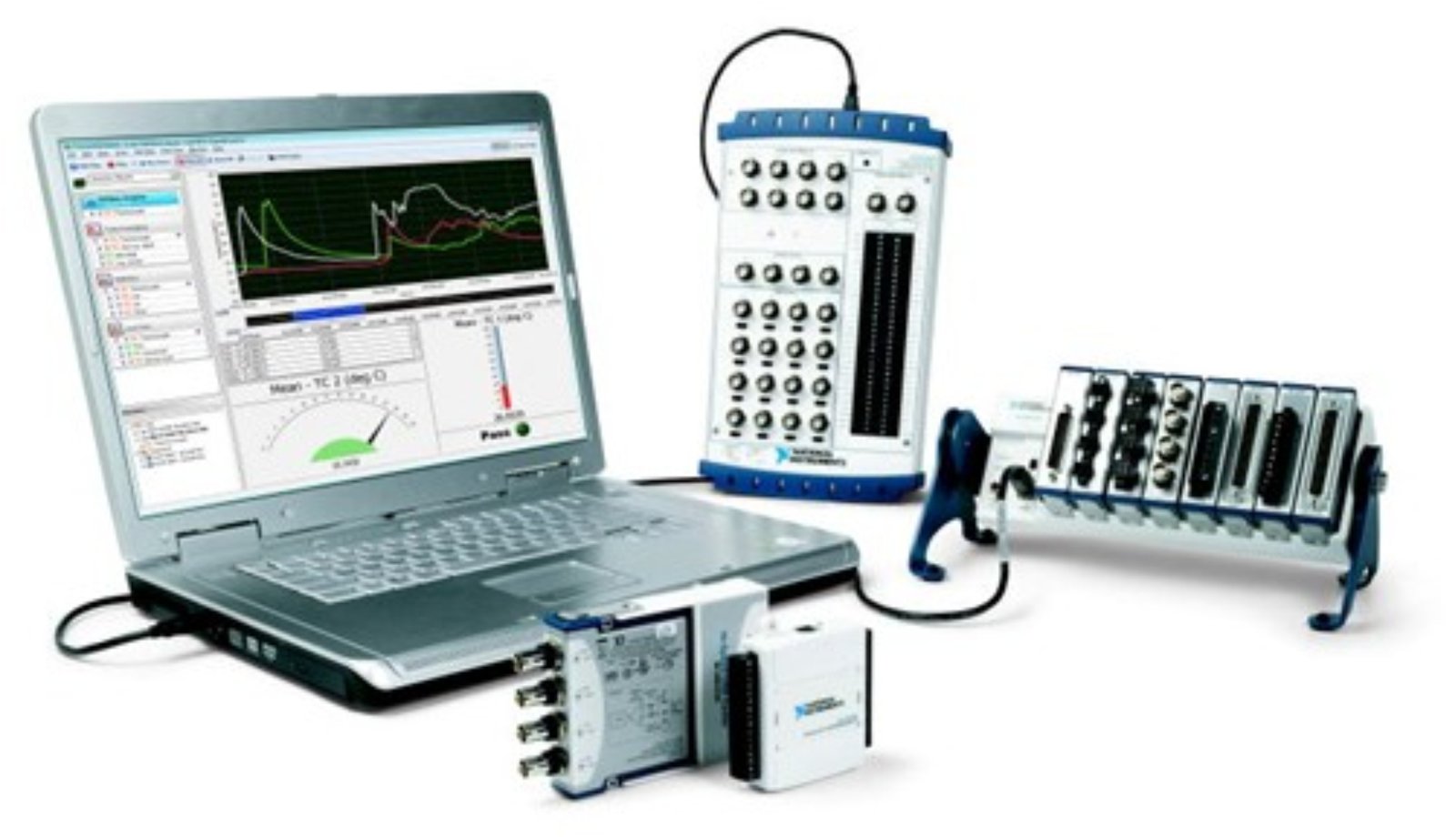
What is NATA Accredited Calibration? – A Guide to the Basics

NATA Accredited calibration is a process that test facilities follow to ensure that equipment they use to test devices adhere to standards set by the network equipment industry. An independent third party verifies that the test equipment and test process adhere to industry standards and is used to make sure that test results are reproducible and valid.

A NATA Accredited calibration process follows set steps to ensure the calibration of test equipment and test procedures adhere to established industry standards. It’s essential that test facilities understand the NATA Accreditation process and its importance in device testing. This article will give you a brief overview of the NATA Accredited calibration process, as well as some of the common benefits of having your calibration process verified by NATA.

What is NATA Accredited Calibration?

NATA Accredited calibration is a process that test facilities use to ensure the equipment they use for device testing meets industry standards. It’s important for test facilities to understand the requirements and benefits of NATA Accredited Calibration because it can help maintain the integrity of your device testing. NATA Accreditation is required by many manufacturers to verify that their devices adhere to industry standards set by the network equipment industry.

Additionally, some companies may require or request NATA Accreditation as part of their quality control process. Since NATA Accredited calibration processes follow set steps to ensure calibration procedures adhere to established industry standards, it’s crucial that test facilities understand its importance in device testing. This article will provide you with a brief overview of what NATA Accredited Calibration is and explain how it can benefit your business.

Benefits of Having Your Calibration Process Verified

NATA Accredited calibration provides an independent third party verification of a calibration’s validity and accuracy. This type of verification protects manufacturers from the costs of having to recall or re-test devices due to inaccurate test results. There are three benefits of having your calibration process verified by NATA: 1. Validation 2. Verification 3. Reduced Risk 1. Validation: One benefit of having your calibration process verified by NATA is validation, which means it will be easier for manufacturers to see if their device’s results are in line with industry standards or not.

With validation, you can be sure that your device is within the parameters set by its manufacturer and that it will pass any required tests with flying colors! 2. Verification: Another benefit of having your calibration process verified is verification- which means you’ll have a thorough understanding of how much risk there is around your test results before they’re published on the market by verifying the compliance protocols for a particular product or service. With this information, you can determine whether or not it’s worth continuing with that product or service at all or whether it’s better to switch over to another device altogether before it becomes too costly!

NATA Accredited Calibration

Steps of a NATA Accredited Calibration

The five steps of a NATA Accredited calibration process are: 1. Setup 2. Calibration 3. Collection and Analysis 4. Verification and Validation 5. Release of Test Results NATA Accredited calibration is an important part of the device testing process because it ensures the test equipment and procedures adhere to the standards set by the network equipment industry.

 There are many benefits to having your calibration verified by a third party, including: – Having a third party verify that your calibration process is reproducible, valid, and adheres to established industry standards – Having your results certified so you have certainty about their accuracy – Ensuring only appropriate measurements are taken for each test in order to obtain relevant data.

How to Get Your Calibration Process Verified?

First, contact the NATA Accreditation program to find a test facility near you. Be sure to provide the following information: -The type of device that will be calibrated -A list of equipment needed for the calibration process -Location and date of calibration -An estimate on how many devices will be tested during the calibration process NATA Accredited Calibration is a system in which an independent third party verifies test procedures and equipment used by facilities to ensure they adhere to industry standards. It’s imperative that companies understand the importance of having their calibration processes verified by NATA before they use them.

Conclusion

NATA Accredited Calibration is a process that ensures that your lab equipment is in working order. If your calibration process was not verified by a NATA accredited laboratory, your data could be in jeopardy of being lost. Before you invest in a NATA accredited laboratory, you need to be sure that it will make your data available to you in case of an audit.

Source : https://appliedmeasuremel.blogspot.com/2022/05/what-is-nata-accredited-calibration.html

Pressure Transducers Explained: How to Choose the Correct Type for Your Application

Do you ever wonder how people know how much pressure is being exerted on them in different settings? Or maybe you’ve been asked to build a scenario where someone would know how much pressure is being exerted on them? If so, you’re not alone! As the saying goes, no good without ‘pressure.’ Pressure is an essential part of any scenario where you have to know how much force is being exerted on you. Pressure is a dynamic variable that is measured by pressure transducers. In this article, we will be going over some of the common types of pressure transducers, their benefits, and applications where they make the most sense.

What is Pressure?

Pressure is a force exerted on an object that can be measured. There are two types of pressure: Static and Dynamic. Static pressure is the amount of force required to move an object up or down in a fluid, while dynamic pressure is the amount of force required to move the object either left or right in a fluid.

Types of Pressure Transducers

The most common types of pressure transducers are manometers and strain gauges. Manometers: Pressure transducers that measure the force exerted on a surface. They are typically used for measuring pressures in the order of 1-5 kPa (thousandths of a bar). Strain Gauges: Pressure transducers that measure stresses in an object or material, such as the mechanical stress from vibrations. They are typically used for measuring stresses in the order of 0-5 MPa (millions of pascals) and can be used to detect very small changes in strain. Other types of pressure transducers include hydraulic pressure sensors, piezoelectric pressure sensors and capacitive pressure sensors. For example, piezoelectric pressure sensors use a voltage change when they’re deformed by a static or dynamic load to generate an output signal proportional to the applied load’s magnitude.

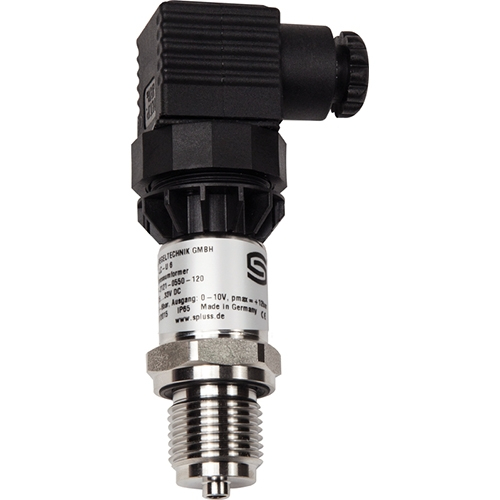
pressure transducer

Benefits of Pressure Transducers

Pressure transducers are an important component in industrial and scientific settings where pressure is constantly being measured. Pressure transducers are usually attached to a sensor, which will transmit the pressure value to a control system. Pressure transducers come in a wide range of uses, with each type having its own unique benefits. The most common types of pressure transducers include: – Piezoelectric stacks

– Bourdon tubes

– Diaphragm actuators

– Differential manometers

– Turck cylinders

– Coriolis flowmeters

– Thermal expansion gauges.

How to Choose the Right Type of Pressure Transducer for Your Application

Pressure transducers come in a variety of shapes and sizes, but each one is designed to measure a certain type of pressure. Different types of pressure transducers offer different benefits depending on their use case. For example, water-jet pressure transducers are probably better suited for industrial applications where they can be mounted on equipment that regularly operates with high pressures or at sea level. On the other hand, piezoelectric pressure transducers are better suited for medical applications where they need to measure low pressures and temperatures.

Which Pressure Transducer Should You Use?

There are many different types of pressure transducers, but the most common and best suited for most applications is a differential pressure transducer. The benefits of this type of transducer are that it is low cost, simple to use, has no moving parts to wear out, is accurate and reliable, and can be manufactured in various configurations. If you have any questions or concerns about which type of pressure transducer might work best for your application, please feel free to contact me!

Conclusion

Pressure transducers are a relatively common sensor you can find in many applications. Before choosing a pressure transducer for your project, it’s important to understand the difference between common types, the benefits of those types, and how to decide which type is the best for your application.

Source : https://appliedmeasuremel.blogspot.com/2022/05/pressure-transducers-explained-how-to.html

How To Use A Digital Inclinometer To Stay Safe In The Great Outdoors?

When you’re adventuring outdoors, there are always risks involved–even if you’re just going for a walk in your neighbourhood. One of the best ways to mitigate these risks is to be prepared, and that includes having the right tools on hand. Today, we’re going to talk about how to use a digital inclinometer. This handy little device can help you stay safe while exploring the great outdoors!

What is an inclinometer?

An inclinometer is a device used to measure the angle of slope or tilt. In other words, it tells you how “uphill” or “downhill” you are travelling. This information can be helpful when hiking or skiing, as it can help you stay safe in steep terrain. It also have a “level” function, which allows you to ensure that your device is reading accurately.

How does an inclinometer work?

An inclinometer is a handy tool used to measure angles. It is made up of two perpendicular arms and a calibrated scale. When the object to be measured is placed between the two arms, the scale will indicate the angle in degrees.

Most inclinometers also have a built-in protractor function, which can be used to measure other angles in addition to vertical angles. Digital inclinometers are preferred because they are easier to read and give more precise readings than analogue inclinometers.

digital inclinometer

What are the benefits of using a digital inclinometer?

A digital inclinometer is a great tool in your outdoor gear arsenal. They’re can be used for a variety of activities like camping, hiking, biking and climbing. Here are some of the benefits of using a digital inclinometer:

-They’re compact and easy to carry around

-They measure slope angles accurately

-They can be set to warn you when you reach a dangerous slope angle

-They have a backlight for easy reading in low light conditions

How to use a digital inclinometer?

A digital inclinometer is a great tool to have in your outdoor arsenal. It’s perfect for measuring slope angles, checking the stability of slopes before you hike or climb them, and even for creating maps. Here’s how to use one:

-Choose the unit of measurement you want to use (degrees, percent, or metres).

-Line the inclinometer up with the slope you want to measure.

-Make sure the device is level, then read the angle value on the display.

-Record your findings, then repeat as necessary. Remember to use caution when traversing any slope, no matter how slight—better safe than sorry!

Safety tips for using a digital inclinometer

When using a digital inclinometer, be sure to follow these safety tips:

-Always be aware of your surroundings and what is happening around you.

-Be mindful of where the device is pointing and who or what is in the line of fire.

-Never use the device when you are distracted or in a rush.

-Calibrate the device before and after each use.

-Ensure that the sensor is clean and clear of obstructions before taking a measurement.

-Store the device in a safe place when not in use.

Conclusion:

A digital inclinometer is an essential tool for hikers, backpackers, and other outdoor enthusiasts. By using a digital inclinometer, you can ensure that you’re always aware of your surroundings and maintain your safety while outdoors.

Source : https://appliedmeasuremel.blogspot.com/2022/04/how-to-use-digital-inclinometer-to-stay.html

How Can Measurement Equipment Suppliers Be Beneficial For You?

Correct dimensional dimension is a crucial factor in manufacturing. Performing measures with the same reference throughout all processes makes it possible to produce products that match the design exactly and to guarantee product quality. Still, product quality can be compromised, If indeed one person performs inaccurate measures. Should this lead to imperfect products being mixed in with good products, the result will be a worse yield. In addition, shipping imperfect products as finished products will lead to complaints from guests. These basics make up an action known as Data Acquisition, a core conception of quality control. In recent times, dimension control has been formalized as dimension operation systems (ISO 10012). Also, enterprises for metrological traceability have been pacing steadily to guarantee correct measures.

Measurement Equipment suppliers

Benefits:

Ameliorate Measurement Accuracy on the Plant Bottom

Using measuring tools similar to micrometres can ensure of the product manufactured within a specific dimension range. Likewise, if any corridor coming off the production line is out of spec, you can check the dimension data collected and see exactly at what point the corridor was out of spec and acclimate the ministry as demanded.

Save Time When Taking Critical Measures

Patrick Sullivan, Strategic Distribution Deals Specialist for Mitutoyo America Corporation, explains that inspectors using dimension tools without the capability to affair data have to write down measures, and manually enter the data into a computer. With wireless perfection measuring tools, inspectors only have to take the dimension. By connecting the data communication system to your business’s network via Bluetooth or advanced Zigbee protocols, the dimension is automatically transmitted from the measuring tool to a database or linked operation.

Formalized Tests

Once Measurement Equipment Suppliers understands the forbearance situations it needs to meet, its hunt is to find a dimension system that delivers the delicacy demanded. The good news is nearly every estimable metrology outfit maker will ensure that its outfit conforms to delicacy conditions specified by either ASME in its B89 norms or ISO in its 10360 norms.

Product Sapience

It’s insolvable to know the real state of your production operations without measuring it. Hourly, manufacturers will assume that their process effectiveness is much more advanced than it is. This is because you can not manage or ameliorate effects that aren’t being measured. When you dissect your product performance and performance losses, you’ll have a better understanding of which areas of your product are working at peak effectiveness, and which areas require enhancement.

Why is Data Acquisition important?

The data accuracy of all measuring device degrades over time. It is generally caused by normal wear and gash. Depending on the type of instrument and the terrain in which it’s being used, it may degrade veritably snappily or over a long period. The nethermost line is that estimation improves the delicacy of the Data Acquisition device. Accurate measuring bias ameliorates product quality.

Source: https://datameasurement.mystrikingly.com/blog/how-can-measurement-equipment-suppliers-be-beneficial-for-you

What Are Your Considering Points When Selecting Data Acquisition Tool?

How would you pick fitting Data Acquisition equipment? To respond to this inquiry you truly need to investigate your vibration estimation application. Guaranteeing you have the ideal arrangement for your test climate will help you get important information out of your tests and exams. A portion of the contemplations you should make are What sort of sensor am I utilizing? What’s more, What separating abilities do I need?

This blog entry will give you an outline of the determination models you ought to consider while assessing information procurement equipment for your stun and vibration examination. 

  • Sensor Compatibility 

The sensor choice will regularly direct what kind of information obtaining framework is fitting dependent on the sensor’s yield. Does the sensor have a computerized yield? What is the yield range? Low affability sensors may require amplification of their yield. An information securing framework that can give the excitation voltage to control the sensor can wipe out the requirement for outside force supplies, disentangling the estimation framework arrangement fundamentally. 

  • Greatest Sampling Rate 

Best practices call for examining the sign at a rate multiple times more noteworthy than the upper finish of the recurrence scope important to catch the vibration profile precisely. For most stun and vibration estimation applications, an information obtaining framework requires an example pace of in any event two or three thousand hertz, however, everything relies upon the recurrence scope of interest. 

data acquisition
  • Estimation Goal 

The goal is commonly determined in pieces which would then be able to be utilized to compute the goal in increasing speed units. For instance, consider an accelerometer framework with a 16-digit goal; at the end of the day, it has 216 or 65,536 speedings up levels or containers it can gauge. 

  • Separating Capabilities 

Separating eliminates undesirable recurrence content and should be a significant piece of any assessment of various Data Acquisitionframeworks. High-pass channels eliminate lower recurrence vibration and are intrinsic in all piezoelectric accelerometers which give these accelerometers the AC reaction.  

An ideal channel would consistently pass all frequencies under a predetermined restrict and wipe out all over that limit. This ideal channel would have an entirely straight stage reaction to a similar upper recurrence limit. However, given that ideal channels don’t exist, some trade-off is vital on a channel’s adequacy and stage reaction. Four principle various sorts of channels are utilized: 

  • A Butterworth filter is known for its maximally level adequacy reaction and a sensibly straight stage reaction. The Butterworth channel is the most famous for vibration estimation. 
  • The Bessel filter has almost wonderful stage linearity so it is most appropriate for transient occasions like stun testing. 
  • The Chebsey filter has a quicker move off in the adequacy reaction, which is accomplished by presenting a wave before the move off. These channels have a moderately nonlinear stage reaction. 
  • Elliptic filters have the steepest move off in the adequacy reaction, however, they have a wave in both the passband and stopband. Furthermore, their stage reaction is profoundly nonlinear. 

Wrapping Up,

So, whenever you are going to choose Data Acquisition tool than keep these guidelines in your mind with considering the point.

Source: Learn About The Important Thing While Choosing Data Acquisition Equipment

Data Logger Vs Data Acquisition- How They Differ?

The importance of a highly reliable and efficient temperature monitoring system cannot be taken for granted. Once the system starts failing, negative effects start occurring. It also leads to unexpected incidents like losing stored stem cells. 

Implementing a real-time monitoring system including Data Acquisition in the laboratory system will be a great idea. The system that you are about to include must be highly accurate, flexible, easy-to-handle, and robust. 

An Insight to Data Loggers!

Every laboratory requires a particular device where data can be stored and can be easily extracted. There are numerous devices, but a data loggerwill be the best. This device will record the temperature of the entire lab. It will notify in case any deviation takes place that may cause any adverse effect to the samples. 

Data loggers serve as reactive ways of monitoring deviations in numerous cases. Otherwise, it may become too difficult to come across discarded samples.

Along with a logger, a temperature sensor is a particular device that will measure the temperature in case of specific equipment. Also, it will transmit the data to a device that will serve as a repository. This temperature is very important and must be watched diligently as a little bit of deviation may affect samples poorly.

What is the Difference between Data Acquisition System and Data Logger?

There is confusion between data acquisition and data logger. Some people presume that both are the same. But it is just the reverse. Below are some vital differences that exist between the two:

In case of an alarm, the data acquisitionsystem will permit you to log in virtually. You will be able to come across notifications while capturing every movement prior to and post the alarm. 

On the other hand, a data logger will let you interrupt in between the logging sequence. Doing so will let you diagnose issues. But there will be a risk of missing any information between the logs. 

  • Differs in terms of configuration– Usually, the data acquisition system is a configurable system. It will give you the provision to set parameters for alarm. In case you are monitoring the water level in a tank, you may set up the alarm to notify overflowing. Also, you may set a pre-alarm and give yourself enough time before it starts overflowing. 

Whereas, in the case of a data logger there are chances that you may miss out on the target. The system is such that it will result in some type of interruption. 

  • High accuracy level – A data acquisition system is known for its high accuracy level. It will let you set sample rates at an interval of a second. It will serve as a time savior and will ensure a high level of accuracy. 

Whereas, in the case of data loggers; the time taken for setting sample rates is a minimum of fifteen minutes. It helps in preserving battery life. 

After going through the comparison in detail, it is for sure that you have come across the difference between data acquisition and data logger. For better performance, it is preferable to go with data acquisition as it helps in improving SOPs through valuable information.

Source:- How Does Data Acquisition System Differ From Data Logger?

Utility And Purpose Of Data Acquisition Systems And Data Loggers

The main use of data acquisition systems is to take samples, record, store and to further analyze real time data. The recorded data is then taken from these systems then fed into a proper computing device and is further stored to carry out analysis at a future point of time.

In the market, you will be able to find different types of data recording equipment designed and offered for varied purpose. Data acquisition is often connected with data logging, however each of this is different from others and serve different purpose as well. Both are used interchangeably to a great extent. To be clearer, it can be said that data loggers are usually subset of DAQ systems.

There are some advanced data acquisition systems, which are specifically made for large size companies and manufacturing companies. The systems developed for these companies are usually very complex in nature and make use of multi-level software, which helps them in incorporating different parameters at the phase of data output. Some of the systems are made for public use, whereas there are data loggers as well, which is basically used for the purpose of research, manufacturing and mainly for large scale use.

Data Acquisition Systems

It is often abbreviated as DAQ systems, which are usually equipped with different types of electronic devices designed specifically for data recording purpose, storing the data and further analyzing it in the best way over a period of time. In research based projects and in life science, data acquisition has a significant role.

Due to lack of these systems can simply result in great deal of research time and can even result in loss of valuable data in absence of its storage. This can sometimes even be the reason behind any project failure. Therefore, it can be said that data management holds great importance in different universities in India and across the globe as well.               

Data Loggers

To define it in a precise way, these are basically stand-alone electronic instruments, which prove beneficial in recording all types of data in a safe and secure manner. They can also be termed as data recorders. There are also GPS data loggers available in the market, which prove useful tool for businesses to check that whether employees are taking detours from assigned tasks during the entire day. The best thing about these loggers is that it can work efficiently on air, land and even sea and will prove helpful for you in showing the location, you travelled probably on Google map.

They are basically small size machines, which require battery power to operate. You can make use of rechargeable batteries, which can be conveniently used with data logger. The best thing about this type of instrument is that it proves helpful in recording information, without the need of anyone’s presence over there for the recording purpose.

Yes, the batteries need to be changed at regular intervals of time. Further, these devices or instruments can record vital data, which can be used for varied purposes and reasons depending on the type of data acquired in data loggers.

Thus, the use of data acquisition systems and data logger have great significance and are best suitable for data management purpose.